Every font is 40% off. Two fonts are 45% off. Three or more are 50% off.
Font guide
How to stitch a machine applique embroidery font
An applique embroidery font is not a filled letter. The machine stitches a path, you add a piece of fabric, and the last stitch covers the cut edge with satin. Skip a stop, or trim too late, and the letter frays or the satin sits on top of a lump of extra cloth.
Every applique letter in these fonts follows the same order. The color stops are the instructions. Run them one at a time and do the hand work between the stops, not after the design has finished.
The six steps
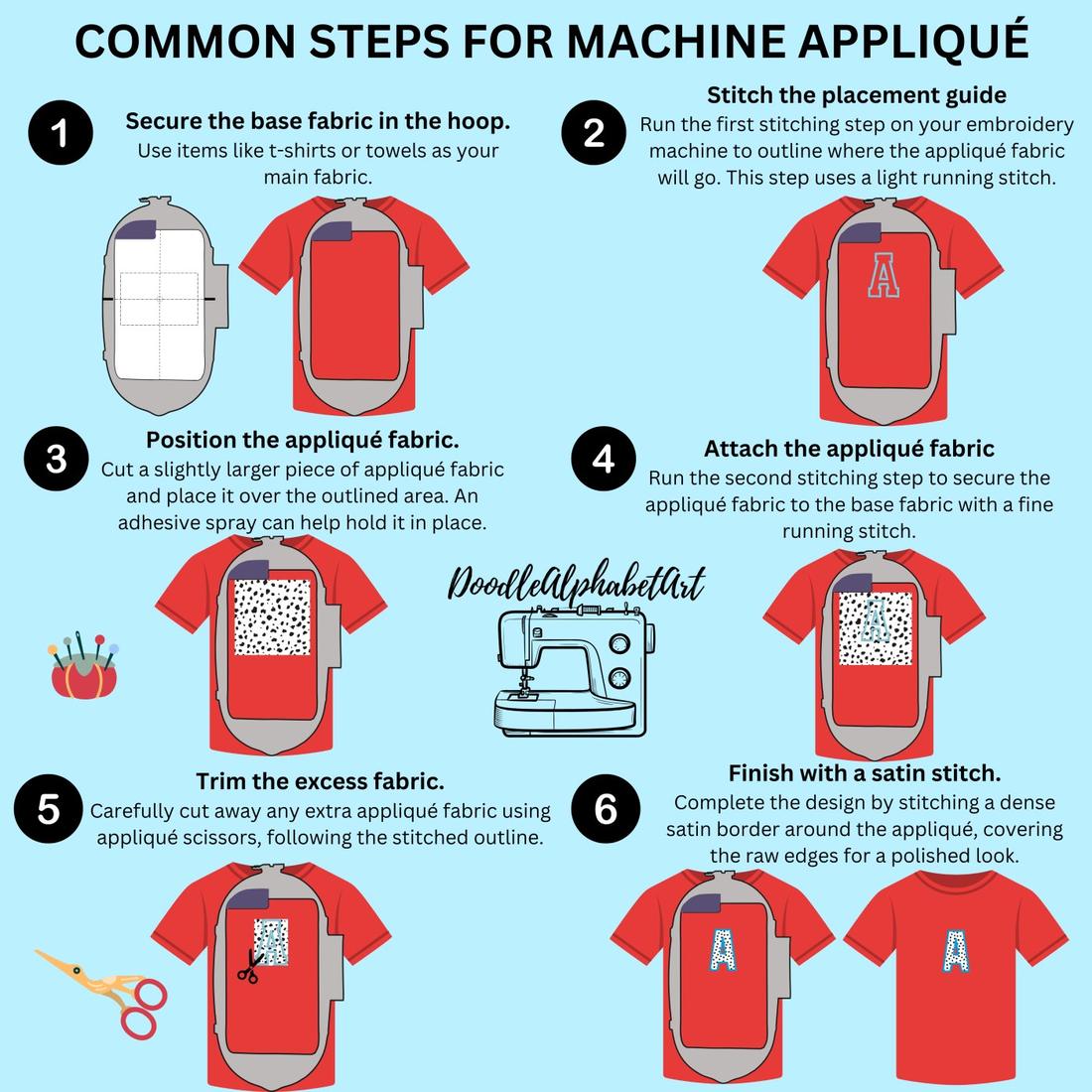
Placement, fabric, tack-down, trim, then satin. The letter is not finished until the raw edge is covered.
Secure the base fabric in the hoop. A cotton T-shirt or a towel is a sound start. Hoop it tight, with stabilizer under the stitch area. If the shirt can slide, the placement line and the satin will not land on the same spot.
Stitch the placement guide. Load the letter and run only the first stop. It is a light running stitch. That line is the map for the fabric. Do not run the later stops yet.
Position the applique fabric. Cut a piece at least a quarter inch larger than the outline on every side. Cotton, felt, or a fabric backed with Heat n Bond all work. A fabric that frays badly is harder to trim cleanly. Center the piece over the stitched guide. A light mist of temporary adhesive spray, or a glue stick, keeps it flat. Wrinkles show up under the satin.
Attach the applique fabric. Run the second stop. It is another fine running stitch, and it tacks the new fabric to the shirt. Check that the stitch caught the applique piece all the way around before you cut anything.
Trim the excess fabric. Take the hoop off the machine if that makes the cutting easier, but do not unhoop the shirt. With curved applique scissors, cut just outside the tack-down line. Do not cut the base fabric and do not cut the stitches. The closer the trim, the cleaner the satin can cover the edge.
Finish with a satin stitch. Put the hoop back and run the last stop. The satin is dense on purpose. It covers the raw edge, locks the applique, and becomes the letter you see. If a bit of the cut fabric still peeks out, the trim was too far from the line.
What to have at the machine
Stabilizer under the shirt or towel. A cutaway holds a knit. A tear-away can be enough on a firm woven towel.
Applique fabric in the color of the letter, cut larger than the placement line.
Temporary adhesive spray or a glue stick.
Small curved applique scissors. Ordinary scissors make it easy to nick the shirt.
Thread for the satin that suits the fabric. The placement and tack-down can be a matching or a quiet color, because the satin covers them.
Using the BX file
Applique fonts that include BX are typed in Embrilliance, the same way as any other BX font. Install the BX file, type the name, and export the format your machine reads. The exported file still contains the separate stops. On the machine, advance one stop at a time so you can place the fabric and trim before the satin runs.
Running every color stop in one go. There is then no moment to lay the fabric or to trim it.
Cutting the applique piece the same size as the placement line. You need the extra quarter inch so the tack-down can catch it.
Trimming after the satin. The satin cannot cover an edge that is still buried under spare fabric.
Unhooping the shirt to trim. The satin will not meet the placement line when the fabric goes back in a new position.
Skipping stabilizer on a T-shirt. The knit stretches and the letter puckers.
Questions
Do I need a special machine? No. You need a machine that can stop between colors, which is how applique designs are built. Brother, Baby Lock, Janome, and Singer files are included when the font lists PES, JEF, or XXX. See which file your machine uses.
Can the applique fabric be a different color from the satin? Yes. Many letters use a fabric fill and a contrasting satin edge. Choose the fabric first, then a thread that either matches it or frames it.
What if the satin does not cover the cut edge? The trim was too generous, or the fabric shifted after the tack-down. Cut closer on the next letter, and press the piece flat before the second stop.